Blog — Marilabakoren

Glass units stored in warehouse
Blog
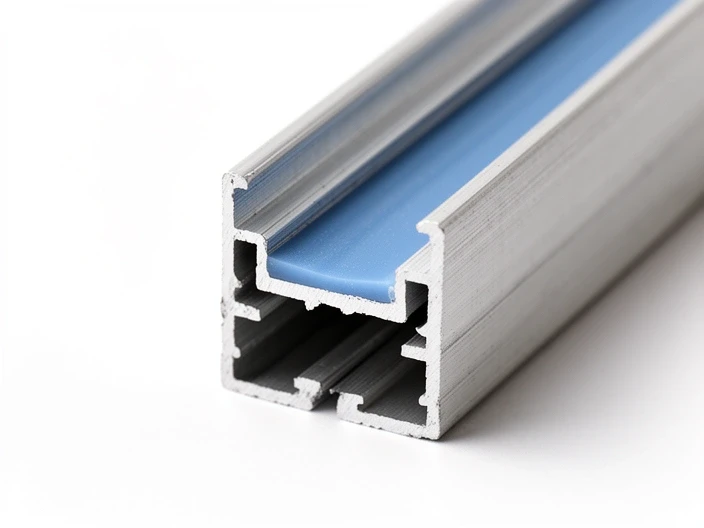
Cross-section of aluminum profile showing thermal break

Thermal breaks: what the width means

Most window manufacturers mention thermal breaks in their spec sheets, but the actual width of the polyamide strip matters more than people think. The industry standard is around 24mm. We use a wider strip because the extra material improves insulation at the frame, which is where most heat escapes in a window system. Glass technology has improved quickly with triple-pane Low-E units, but the frame often hasn't kept pace. A narrow thermal break creates a weak point where cold transfers through the aluminum, and on cold mornings you can see it as condensation along the frame edge. Wider breaks push that cold bridge further from the interior surface. Going too wide starts to affect the profile's structural capacity, especially for large panoramic units that take real wind loads, so there's a practical limit. The sweet spot depends on the profile design and the loads it needs to handle.
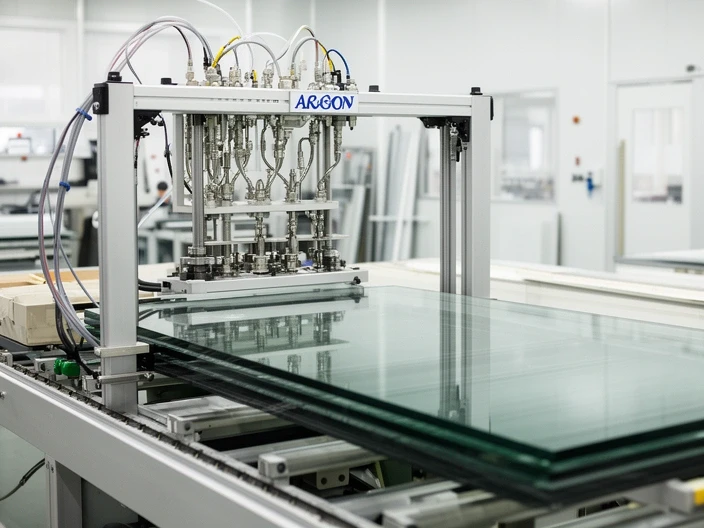
Argon gas filling station for insulated glass units

Argon vs. krypton gas fill

Double and triple-glazed units have gas between the panes: air, argon, or krypton. Air is free and gives baseline insulation. Argon costs more but cuts heat transfer noticeably compared to air. Krypton is denser and performs better still, but costs several times as much. So when is krypton worth it? For most residential windows with standard cavity spacing, argon already works near its best. Krypton pulls ahead at narrower gaps, around 10-12mm, where argon convection currents haven't fully dampened. This matters for slim profile systems where the frame depth is limited and the glass cavities need to be thinner. In a standard frame that fits a 16mm gap comfortably, argon is the sensible pick. In a slim-line sliding system where every millimeter counts, krypton in a narrower cavity can outperform argon in a similarly narrow one. We only recommend krypton when the design actually calls for it.

Facade panel during water penetration test

Wind load and facade design

Wind pressure on a building facade varies by floor, orientation, and the terrain around it. A panel high up on a tower facing open water sees forces that a lower panel in a dense urban block never will. Building codes require us to calculate design wind pressure for each zone of a facade, and those numbers determine glass thickness, profile gauge, and fixing patterns. Moving from a sheltered site to a coastal one can mean going from standard tempered glass to thicker laminated units, heavier aluminum profiles, and tighter anchor spacing. We run these calculations on every project, including small residential ones, because a window that flexes or whistles in a storm isn't acceptable even if it technically holds. Getting the spec right at the engineering stage is always cheaper than replacing panels later.

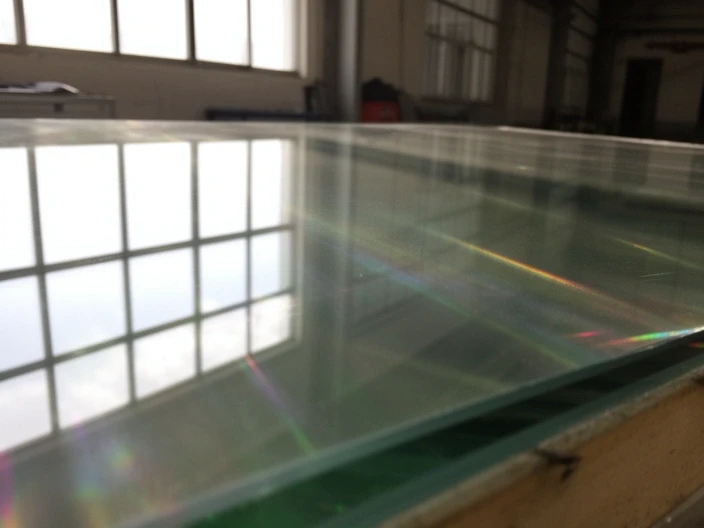
Low-E coated glass with visible spectral reflection

Low-E coatings: position matters

Low-emissivity coatings are thin metallic layers on glass surfaces that reflect infrared radiation. In a double-glazed unit, there are four glass surfaces numbered 1 through 4 from outside to inside. Where the coating sits changes what it does. On surface 2 (inner face of outer pane), it blocks solar heat gain, which suits buildings with high cooling loads or south-facing facades where summer overheating is the main concern. On surface 3 (outer face of inner pane), it retains interior warmth, the better choice for buildings where heating costs are the bigger problem. In Korea's climate, most residential projects benefit from a surface 3 coating because winters are cold. But a south-facing commercial facade with internal heat sources often needs surface 2 to keep the cooling system from working too hard. Some buildings need different coatings on different faces, and that's a custom specification, not a standard catalogue order.